> For the complete documentation index, see [llms.txt](https://docs.dinmo.io/llms.txt). Markdown versions of documentation pages are available by appending `.md` to page URLs; this page is available as [Markdown](https://docs.dinmo.io/workspace-management/enterprise-single-sign-on-sso/sso-using-google-workspace.md).
# SSO using Google Workspace
{% hint style="success" %}
You need Admin access to your Google Workspace and DinMo organisation to be able to use the Google Workspace SSO.
{% endhint %}
## In Google Workspace
**Step 1: Create a custom SAML application for DinMo**
1. Sign in to your [Google Admin account](https://admin.google.com/) as an admin
2. Go to **Apps/Web and mobile apps**.

3. In the upper panel, select **Add App**
4. Choose Add custom SAML app from the suggested options 
5. Name your App **DinMo** and click **Continue** to access the **Google IdP** page

**Step 2: Collect the SAML app details**
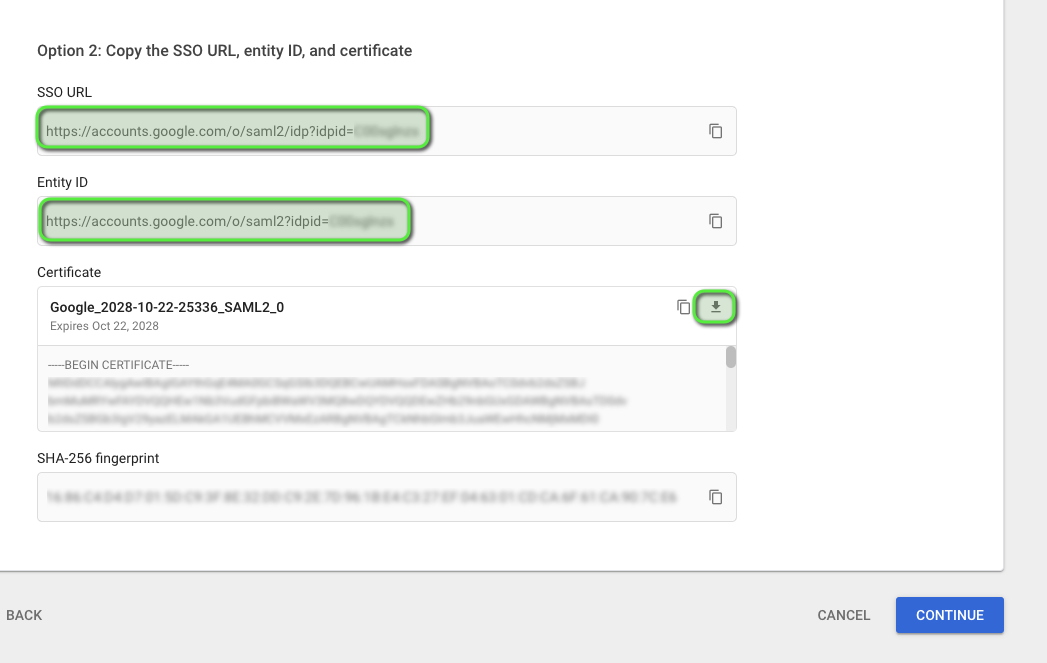
1. Make note of **SSO URL** and the **Entity ID. Y**ou will need them to configure the SSO for your DinMo organisation.
2. Download the Certificate
3. Click **Continue** to proceed to the app configuration.
**Step 3: Configure Google SAML SOO in DinMo**
1. Sign in to your [DinMo workspace](https://app.dinmo.io) as an organization admin
2. Go to your organization management space
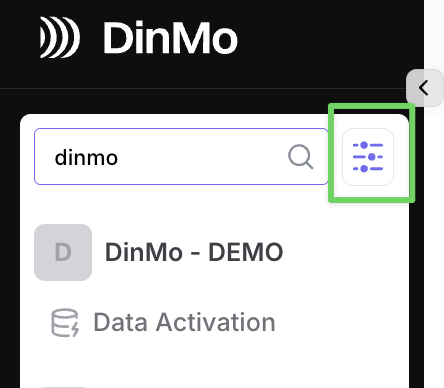
* Click on your workspace name in the top left navigation menu.
* Select **Manage Workspaces**.
* Go to the **Organization Settings** tab.
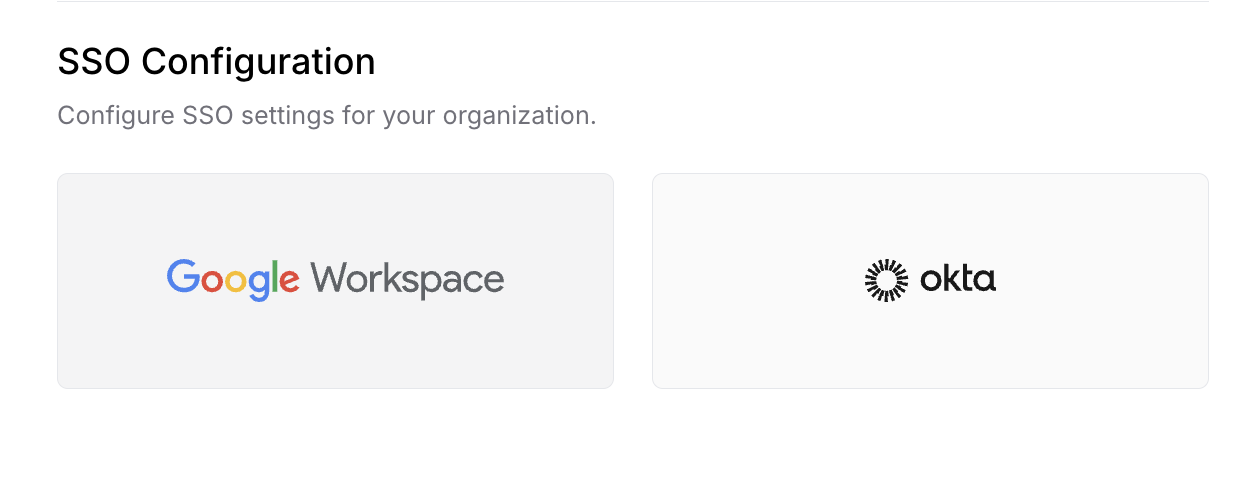
* Select Google SSO.
3. Click on **Google Workspace SSO** button
4. Fill in the Authentification Settings:
* **SSO Portal Key**: Choose a unique key to identify your SSO organization (e.g., `_SSO`).
* **Sign on URL**: Enter the SSO URL collected in Step 2.
* **Application Identifier (Entity ID):** Enter the Entity ID collected in Step 2.
* Click **Save**
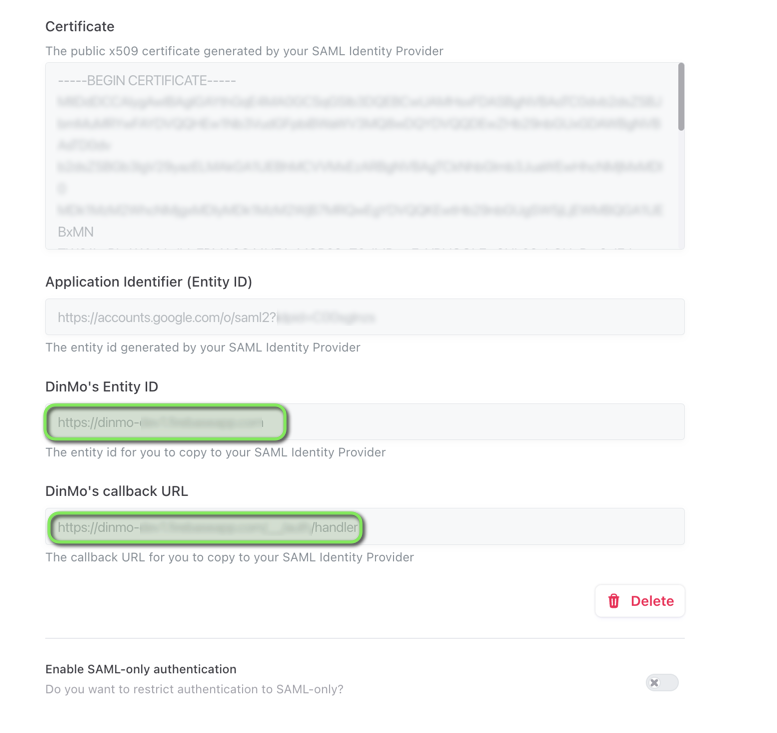
5. Collect the generated values:
* **DinMo’s Entity ID**
* **DinMo’s Callback URL**
* **Your Portal URL**: The URL used to connect to your DinMo workspace through SSO.
**Step 4: Complete the SAML App Configuration in Google Workspace**
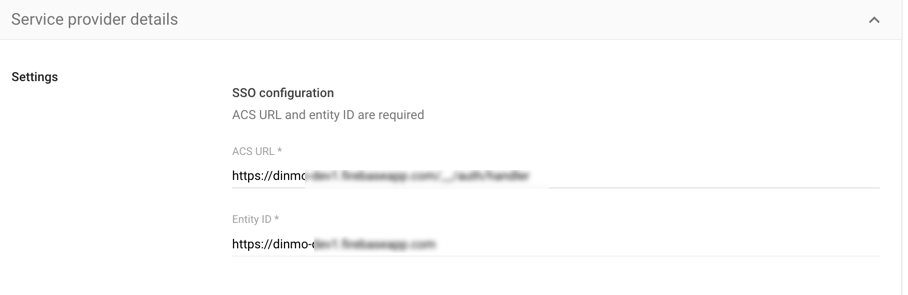
1. In the **ACS URL** field, enter DinMo’s **Callback URL** collected in the previous step.
2. In the **Entity ID** field, enter DinMo’s **Entity ID** collected earlier.
3. Click **Save**.
## **Step 5: Limit Access to Authorized Users (Optional)**
For additional security, you can restrict access to your DinMo workspace to authorized users only in your IdP. To enable this, toggle the **Enable SAML-only authentication** option.
***
{% hint style="success" %}
:tada: Congratulations! You have successfully enabled SSO for all your DinMo account workspaces.
{% endhint %}
## Connecting to a workspace using SSO
### Method 1: using DinMo sign-in
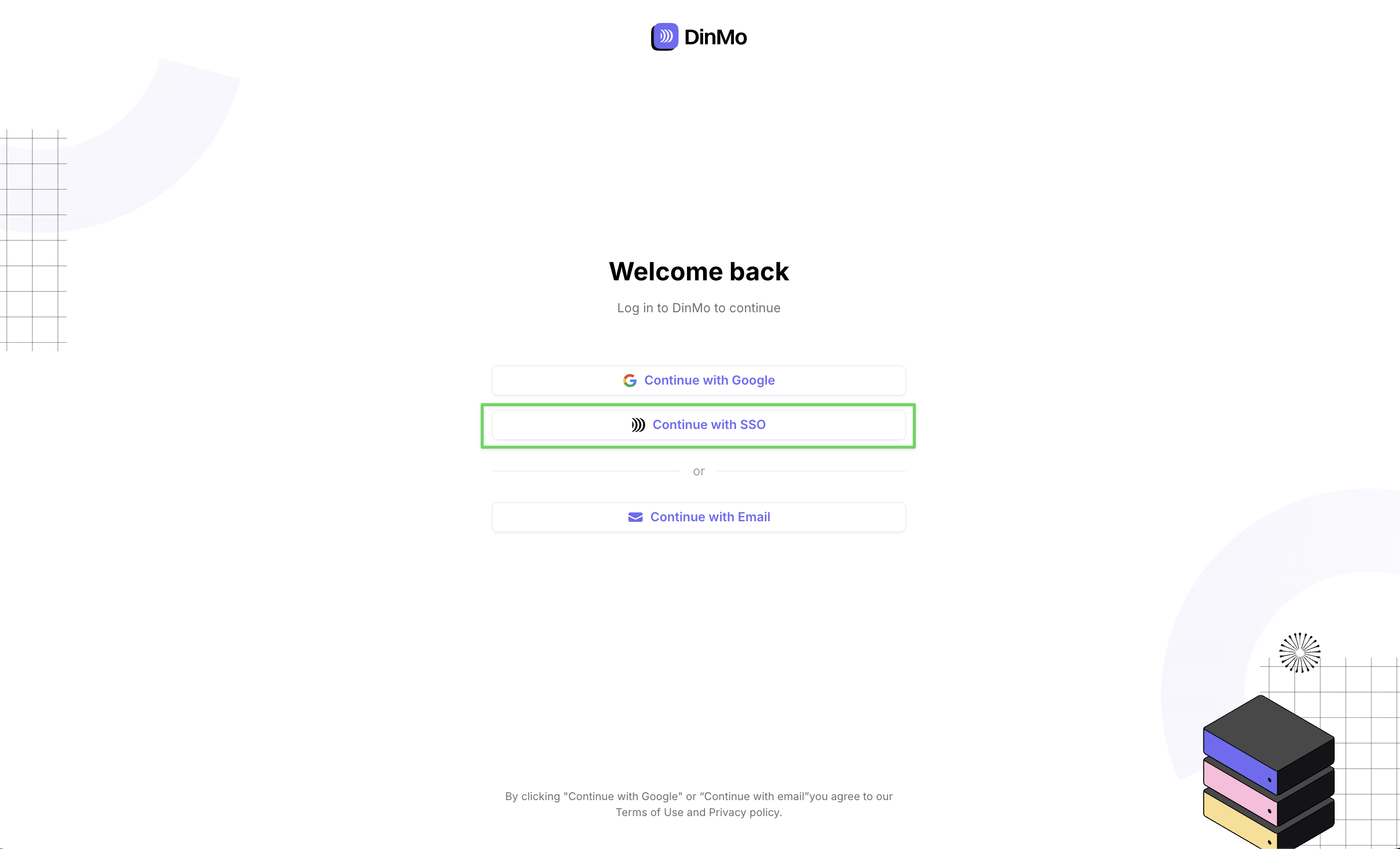
* Go to
* Click on "Continue with SSO"
* Enter your **SSO Portal Key**
* Validate your connection with Google
### Method 2: using your specific URL
* Go to [https://app.dinmo.io/sso?key=your\_key](https://app.dinmo.io/sso?key=dinmo)
* Validate your connection with Google
---
# Agent Instructions
This documentation is published with GitBook. GitBook is the documentation platform designed so that both humans and AI agents can read, navigate, and reason over technical content effectively. Learn more at gitbook.com.
## Querying This Documentation
If you need additional information that is not directly available in this page, you can query the documentation dynamically by asking a question.
Perform an HTTP GET request on the current page URL with the `ask` query parameter, and the optional `goal` query parameter:
```
GET https://docs.dinmo.io/workspace-management/enterprise-single-sign-on-sso/sso-using-google-workspace.md?ask=&goal=
```
`ask` is the immediate question: it should be specific, self-contained, and written in natural language.
`goal` is optional and describes the broader end goal you are ultimately trying to accomplish on behalf of the user. GitBook uses it to tailor the answer towards what is most useful for that goal.
The response will contain a direct answer to the question and relevant excerpts and sources from the documentation.
Use this mechanism when the answer is not explicitly present in the current page, you need clarification or additional context, or you want to retrieve related documentation sections.